Corona bei den Hillbillies

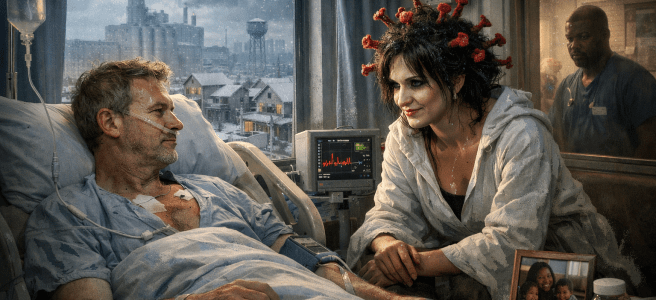
Während Donald in Israel das neue Golfresort plant, geht alles andere seinen Gang. Hier im Krankenhaus. Hier mit einer neuen Corona Generation. Wer interessiert sich für Donald? Für seine Vorlieben und Ein- Stellungen? Wo das Leben ist, riecht das Zimmer gesund nach Desinfektionsmitteln und abgestandenem Kaffee. Was noch? Monitorpiepen, das gleichmäßige Zischen von Sauerstoff, irgendwo auf dem Flur flucht ein Pfleger leise vor sich hin. Ich liege da mit aufgesägtem Brustbein, frischer Narbe, frisch repariertem Herzen – wieder einmal – und einer Krebsdiagnose, die sich anfühlt wie ein schlechter Witz mit Pointe aus Stahl.
Draußen schneit es über Buffalo. Der Wind vom Lake Erie pfeift gegen die Scheiben wie ein beleidigter Gott.
Und dann sitzt sie plötzlich da.
Corona.
Nicht als Virus, nicht als Grafik aus den Nachrichten, sondern als Frau mit zu großen Augen und einem Mantel, der aussieht wie aus Krankenhauslaken genäht. Ihre Stimme kratzt wie trockener Husten.
„Na“, sagt sie, „wir zwei schon wieder.“
Ich drehe den Kopf ein Stück. „Du hast ein Talent für Timing.“
Sie lächelt schief. „Du auch. Herzinfarkt während einer Krebsdiagnose – das ist fast schon Performancekunst.“
„Fick dich.“
„Oh, ich ficke niemanden“, sagt sie ruhig. „Ich decke nur auf.“
Draußen schiebt sich ein Schneepflug durch die Straße. Buffalo im Winter ist wie Amerika im Dauerzustand: hart, weiß, laut und immer kurz davor, im Eis stecken zu bleiben.
„Weißt du“, sagt sie und rückt näher an mein Bett, „in Buffalo haben sie gemerkt, was ich wirklich bin.“
„Ein Virus.“
„Nein. Ein Scheinwerfer.“
Sie lehnt sich zurück. „Ich habe nur beleuchtet, was längst da war. Die Familien im East Side-Viertel, schwarz, arm, drei Jobs, kein Krankenversicherungsschutz. Und die Familien draußen in den Vororten, weiß gestrichene Zäune, Homeoffice, Aktienportfolios, Sauerteigbrot.“
Ich lache trocken, was sofort wehtut. „Du willst mir erzählen, du bist sozialkritisch?“
„Ich bin konsequent“, sagt sie. „Ich gehe dorthin, wo Menschen eng sind. Wo sie Bus fahren müssen. Wo sie in Pflegeheimen arbeiten, in Schlachthöfen, in Krankenhäusern wie diesem.“
Sie tippt gegen meine Infusionsleitung. „Reichtum kann Abstand kaufen. Armut nicht.“
Ich denke an Jane Walker. Jane mit den dünnen Handgelenken und den immer zu großen Träumen. Jane, die immer die schlimmsten Karten zieht. Kranker Vater, Schulden, ein Mann, der schneller verschwand als das Geld auf dem Konto. Und dann ich, hier, operiert, wiederbelebt, während sie irgendwo Rechnungen sortiert.
„Warum kriegen manche die tollen Ehepartner“, murmele ich, „die sicheren Häuser, die gesunden Gene – und andere nicht?“
Corona zuckt mit den Schultern. „Weil Amerika nie gerecht verteilt hat. Nicht Liebe, nicht Geld, nicht Luft.“
„Jetzt klingst du wie eine Soziologie-Professorin.“
„Vielleicht bin ich das“, sagt sie. „Oder vielleicht bin ich nur das Echo von Jahrhunderten. Sklaverei, Redlining, Hypotheken, die nur in bestimmten Vierteln genehmigt werden. Schulen, die von Grundsteuern leben. Reichtum, der vererbt wird wie ein Familienrezept.“
Sie beugt sich vor. „Weißt du, was der wahre Unterschied zwischen schwarz und weiß in diesem Land ist?“
„Sag’s mir.“
„Fehler.“
Ich runzle die Stirn.
„Weiße Familien dürfen Fehler machen“, fährt sie fort. „Ein missglücktes Studium, eine gescheiterte Firma, eine Sucht. Schau Dir Donald an. Das Gegenteil funktioniert auch. J.D. ist ein Beispiel. Ein Film im Film . Es gibt oft ein Netz. Elternhaus. Erspartes. Gestolenes. Kontakte. Schwarze Familien? Ein Fehler kann alles kippen. Kein Netz. Nur Beton.“
Das Piepen meines Monitors beschleunigt sich ein wenig.
„Und du?“ frage ich. „Warum ich? Krebs, Herz, du auf Besuch?“
Sie sieht mich lange an. „Weil dein Körper auch Amerika ist.“
„Ach, jetzt wird’s pathetisch.“
„Nein. Realistisch. Dein Herzinfarkt – Stress. Dein Krebs – vielleicht Pech, vielleicht Umwelt, vielleicht Jahre von Druck. Du hast gearbeitet, gekämpft, getragen. Für wen? Für welche Familie? Für welches Bild von Erfolg?“
Ich schweige.
„Du glaubst, du bist hier nur wegen Biologie“, sagt sie leise. „Aber dein Herz hat Jahrzehnte von Erwartungen geschluckt. Stark sein. Funktionieren. Nicht jammern. Vor allem nicht als Mann. Vor allem nicht als jemand, der sich mit Leuten wie Jane Walker solidarisch fühlt, aber trotzdem im System mitspielt.“
„Du gibst mir also die Schuld?“
„Nein“, sagt sie. „Ich gebe niemandem die Schuld. Ich bin nur die Rechnung.“
Der Wind heult gegen die Scheibe. Buffalo ist ein rostiger Traum aus Stahl und Schnee. Fabriken, die dichtgemacht haben. Familien, die geblieben sind. Schwarze Nachbarschaften, die nie die Kredite bekamen. Weiße Viertel, die vom Erbe leben.
„Weißt du“, sage ich nach einer Weile, „Jane trifft es immer am härtesten. Leute wie sie. Immer die schlimmsten Opfer.“
Corona nickt. „Weil sie näher am Abgrund leben. Wenn ich komme, stoße ich nur leicht.“
„Und die anderen?“
„Die rutschen ein Stück. Verlieren vielleicht Geld. Vielleicht Ansehen. Aber sie fallen selten ganz.“
Ich starre an die Decke. „Also was jetzt?“
„Jetzt?“ Sie steht auf. „Jetzt heilst du. Oder du stirbst. Wie immer.“
„Das ist alles?“
Sie geht zur Tür, dreht sich noch einmal um. „Nein. Das ist der biologische Teil.“
„Und der andere?“
„Der andere“, sagt sie, „ist die Frage, was du tust, wenn du hier rauskommst. Bleibst du Teil der Maschine, die Jane Walker zermahlt? Oder brichst du irgendwo ein Zahnrad heraus?“
Sie lächelt – kein freundliches Lächeln, eher ein wissendes.
„Ich komme nicht nur, um zu zerstören“, sagt sie. „Ich komme, um sichtbar zu machen.“
Die Tür schwingt auf. Ein echter Pfleger tritt ein, müde Augen, dunkle Haut, Akzent aus dem Süden. Er prüft meine Werte, richtet die Decke.
Corona ist verschwunden.
Draußen fällt weiter Schnee auf Buffalo. Weiß über Schwarz, kalt über warm, reich über arm. Aber unter allem pulsiert etwas. Ein Herz.

Appointment with Corona


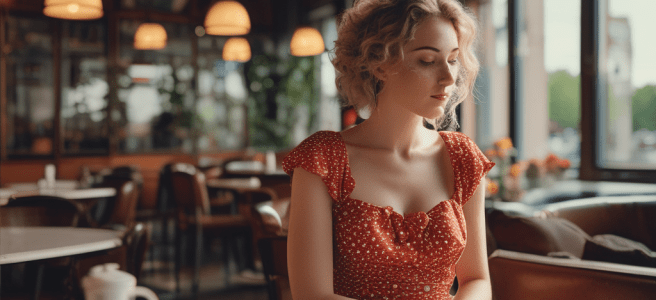
A man enters a cozy café and sits down at a table. He orders a coffee when a strikingly beautiful woman enters. She carries an aura of elegance and mystique that immediately captures his attention. To his surprise, she sits down at his table.

„Good day,“ she says with a charming smile. „May I introduce myself? My name is Corona.“

The man is initially bewildered. „Like the virus?“ he asks hesitantly.

„Exactly,“ she replies, „but I’m here to talk about more than just illness. I represent the deeper meaning of what I have triggered in the world.“

He leans back, intrigued, and sips his coffee. „Then tell me more.“

Corona smiles. „You see, the world as we know it has become unbalanced in recent decades. Humanity, in its pursuit of progress and prosperity, has distanced itself from nature. Overuse of resources, pollution, and loss of biodiversity are just some of the consequences.“

„And what do you have to do with that?“ the man asks curiously.

„I am a mirror,“ she explains. „Through me, people became aware of the fragility of their lives and the vulnerability of their world. The pandemic has shown how closely we are all connected to each other and to nature. Suddenly, people had to pause, reflect, and reconsider their relationship with the environment.“

The man nods thoughtfully. „It’s true, people have begun to appreciate nature more and care about the environment. But was that really necessary?“

„Sometimes,“ Corona says gently, „a crisis is needed to bring about change. The pandemic was a wake-up call. It brought the importance of nature and our health to the forefront. People were forced to rethink their way of life and be more considerate of their surroundings.“

„And what is your wish for the future?“ the man asks.

„I hope,“ says Corona, „that people will retain the lessons they have learned. That they will continue to treat the environment responsibly and maintain the balance between progress and nature. The path to healing lies in harmony between humanity and the Earth.“

The man smiles. „That is a beautiful vision. I hope we can achieve it.“

At that moment, the space around them begins to blur, and before them appears a mighty tree. It is the Tree of Knowledge from the biblical story of Adam and Eve, the tree that conveys knowledge of good and evil.

Corona stands and looks reverently at the tree. „This is the Tree of Knowledge,“ she explains. „In the biblical story, Adam and Eve ate its fruit and thus gained awareness of good and evil. It was a moment of realization that tore them from their innocence and led them to take responsibility for their actions.“

The man gazes at the tree, fascinated. „But this knowledge also brought pain and suffering into the world,“ he says thoughtfully.

„Yes,“ Corona replies, „but it also brought the opportunity to grow and learn. Humanity had to learn to deal with the consequences of their actions, to develop, and to build a deeper connection to the world and to themselves. Just as Adam and Eve had to explore and understand the world anew after their expulsion from Paradise, people were forced by the pandemic to rethink their role in the world.“

„What can we learn from this tree?“ the man asks.

Corona smiles. „The Tree of Knowledge teaches us that true understanding comes with responsibility. The awareness of good and evil is a call to consciously reflect on our actions and consider the consequences. The pandemic has shown us that our prosperity and security are closely linked to the health of our environment and our fellow humans. We must act mindfully and responsibly to create a sustainable future.“

The man nods. „The tree reminds us that knowledge and insight are not just privileges but also obligations. We must use the lessons we learn from this crisis to create a better world.“

The vision of the tree slowly fades, but its message remains in their hearts. Corona rises and smiles at the man. „The future is in your hands. May awareness grow and change follow.“

The man remains, deeply moved and inspired by the encounter. He looks out at the world and recognizes the significance of the lessons the Tree of Knowledge and the pandemic have shown him. With a new understanding and deeper awareness, he prepares to contribute his part to healing the world.

As he stands up, a thought occurs to him. „You spoke about the balance between progress and nature,“ he says to himself. „That reminds me of the Risk Society described by the sociologist Ulrich Beck. A society constantly confronted with the unpredictable risks and side effects of its own progress.“

At that moment, Corona seems to be standing beside him again. „Exactly,“ she says. „Beck’s concept of the Risk Society describes a world in which the advances of modernity bring not only benefits but also new risks that are often global and far-reaching. The pandemic is one such risk. It has made us aware of how vulnerable our highly interconnected world is.“

The man nods. „In Beck’s Risk Society, risks are no longer just local; they affect all of humanity. Climate change, environmental destruction, and pandemics are examples of such global risks. People must learn to recognize and manage these risks.“

„That’s right,“ says Corona. „Beck emphasizes that in a Risk Society, knowledge and insight are crucial to dealing with these risks. The Tree of Knowledge symbolizes this wisdom. It reminds us that as a society, we bear the responsibility to face these challenges and make wise decisions that consider the well-being of all.“

The man looks once more at the Tree of Knowledge, its image still resonating in his mind. „We live in a time when our actions have far-reaching consequences. The pandemic has shown us that we must protect not only our health but also the health of our planet. We must learn from our mistakes and work together for a better future.“

Corona nods in agreement. „Exactly. The lessons from the pandemic and the insights of the Tree of Knowledge offer us the chance to create a sustainable and just world. A world where we understand the risks of our progress and act responsibly to protect future generations.“

With these words, Corona disappears, and the man is left with a profound insight and a clear vision for the future. He leaves the café with the determination to contribute to creating a responsible and conscious society that heeds the lessons of the past and meets the challenges of the Risk Society.


This story combines the deep insights from the biblical tale of the Tree of Knowledge with the concepts of Ulrich Beck’s Risk Society, emphasizing the responsibility that comes with understanding the global risks created by human progress.